If you ever want to understand the true heartbeat of India — skip the fancy restaurants. Step out into the chaos of the streets, and follow the smell of frying oil, sizzling spices, and the loud laughter of people gathered around small carts. Because that is where India serves its soul — in steel plates, banana leaves, and paper bowls full of flavor.
Indian street food isn’t just food; it’s a culture, a daily celebration, and a pocket-friendly indulgence that connects people across classes, regions, and generations. Every corner, every state, and every city has its own story to tell — through taste. So, let’s take a flavorful trip across India’s streets — from Delhi to Mumbai and beyond — and explore how every bite reflects the diversity and madness of this country.
🍜 Delhi: Where Spices Rule the Streets
Delhi’s streets are a carnival of flavors. The city doesn’t just feed you — it overwhelms your senses. Every locality has something different to offer — from the tangy chaos of Chandni Chowk to the trendy markets of Lajpat Nagar and Rajouri Garden.
If you walk through Chandni Chowk, you’ll see people standing around huge iron tawas, where golden-brown chole bhature puff up in hot oil. Nearby, a man pours thick yogurt on top of papdi and tamarind chutney, sprinkling masala like he’s painting a masterpiece. That’s dahi bhalla, Delhi’s cooling contrast to its otherwise fiery menu.
And then there’s Delhi-style Chinese — which, let’s be honest, is not even remotely Chinese. It’s Indian Chinese — spicier, oilier, and unapologetically flavorful. From roadside “Chinese vans” you’ll find chowmein, chili potato, manchurian, and fried rice, served on steel plates for ₹50–₹100. The mix of soy sauce and red chili paste is India’s own version of comfort food.
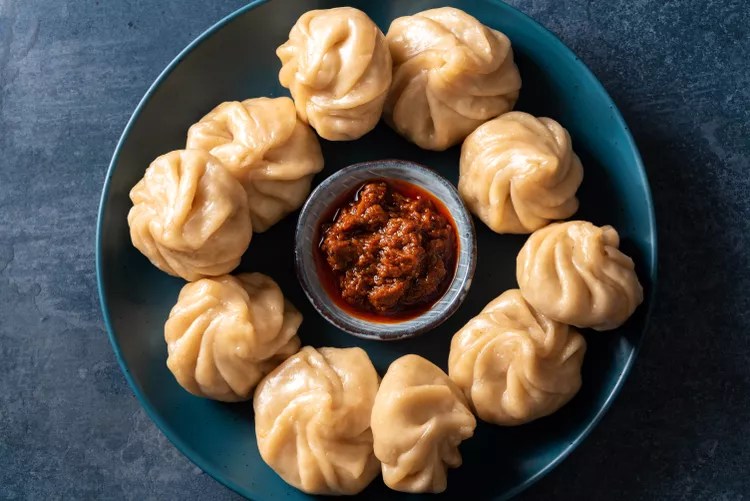
My favourite- Soya Momos — Steamed or fried, stuffed with veggies or chicken, served with dangerously hot red chutney..

🍞 Mumbai: The City That Runs on Vada Pav
If Delhi feeds the heart, Mumbai feeds the hustle. Every Mumbaikar has a relationship with their local vada pav stall — that little shop that saves them during monsoon mornings and rushed office hours.
Vada pav is Mumbai’s answer to the burger — a spicy potato fritter (vada) stuffed between two pav (soft buns), smeared with garlic chutney and fried green chilies on the side. It costs as little as ₹15–₹20.
Alongside vada pav, Mumbai’s streets serve endless comfort in the form of:
- Misal Pav – Sprouted lentils cooked in spicy curry, topped with farsan (crunchy sev), onions, and lemon.
- Pav Bhaji – Thick, buttery vegetable mash eaten with toasted pav buns, usually costing around ₹80–₹100 a plate.
- Poha – Light, flattened rice flavored with mustard seeds, curry leaves, and peanuts; a favorite breakfast snack.
- Sev Puri & Bhel Puri – A crunchy, tangy mix of puffed rice, sev, onions, potatoes, chutneys, and coriander.
Mumbai’s charm lies in how simple food feeds millions — from a taxi driver to a stockbroker. You’ll find these stalls near stations, beaches, or even outside posh offices, each offering a bite of happiness wrapped in newspaper.

🥟 Chennai & South India: Spices and Simplicity
While North India goes heavy on oil and masala, South Indian street food is all about balance — simple ingredients, authentic flavors, and fresh coconut chutneys.
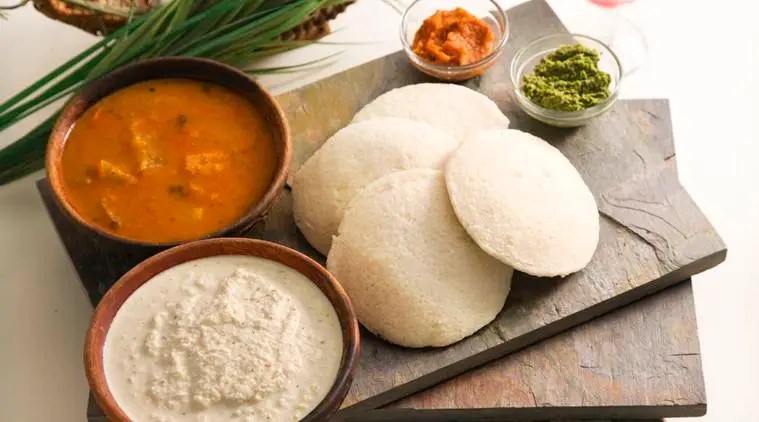
You’ll see steaming idlis, crispy dosas, and tangy sambhar being served from small carts near offices or bus stops. A plate of masala dosa with sambhar and chutney costs around ₹50–₹70, and it’ll keep you full for hours.
Other must-try southern street foods:
- Paniyaram – Tiny round dumplings made from dosa batter.
- Sundal – Boiled chickpeas tossed with coconut, mustard seeds, and curry leaves.
- Kothu Parotta – Minced parotta mixed with egg, vegetables, and spices, cooked on a hot iron slab.
🪙 Why Street Food Wins Every Time
- It’s budget-friendly — Most dishes cost less than ₹100.
- It’s diverse — No two stalls make the same recipe.
- It’s cultural — Every bite tells a story of migration, tradition, and innovation.
- It’s honest — No presentation, no fancy plates — just pure flavor.
Street food in India is the great equalizer — a CEO and a student can stand side by side, eating from the same plate, enjoying the same satisfaction.
💡 Travel Tip for Foreigners:
Indian street food is all about bold flavors and generous use of spices — especially chili! 🌶️ While it’s heaven for spice lovers, it can sometimes be a little intense for those not used to it. Also, hygiene standards at some stalls can vary, since most are open-air. If you’re traveling from abroad, it’s always smart to carry a tablet for stomach upsets or diarrhea — just in case your taste buds (or tummy!) get too adventurous.
So next time you travel, don’t just look for monuments. Somewhere down the lane, a vendor is waiting to serve you the best bite of your life.
 Chai & Matcha Diaries
Leave a comment